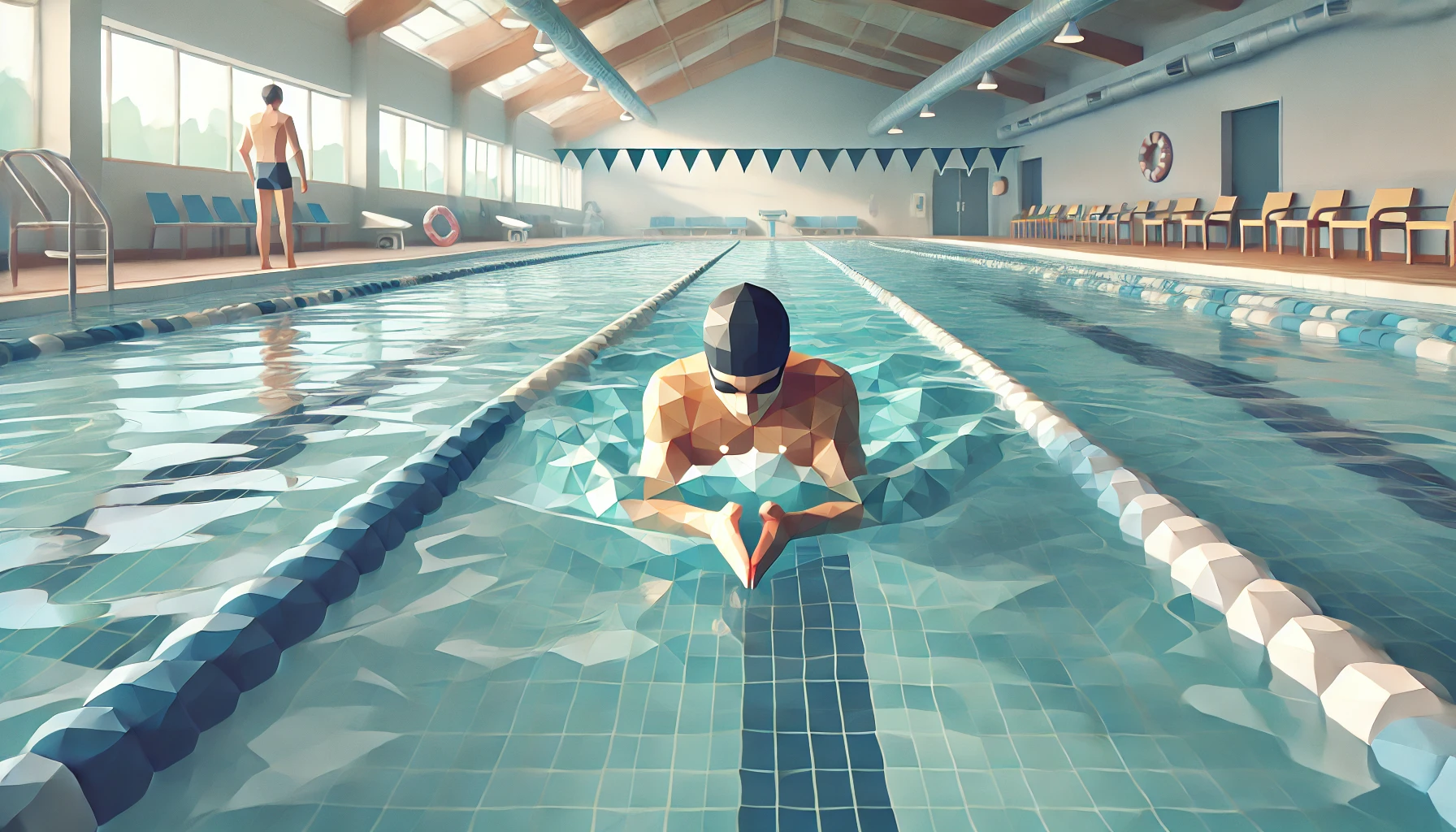

Swimming is often suggested for people with lower back pain because water supports your body weight. That can reduce the load on joints and the spine, making movement feel easier than it does on land. Aquatic exercise has also been linked with reduced pain and better function in people with chronic low back pain.
Still, swimming is not automatically back friendly. Poor technique and the wrong stroke choice can flare symptoms. Research also suggests there is limited direct evidence to support swimming as a specific recommendation for low back pain, so it is worth taking a careful, technique first approach.
Why Water Can Help
- Buoyancy supports body weight, which can reduce loading through the spine and other joints.
- Water provides smooth resistance, which can help you build strength without heavy impact.
- Many people find pool movement easier to tolerate when pain or stiffness makes land exercise harder.
When Swimming Can Make Back Pain Worse
Back pain can flare if your stroke repeatedly arches your lower back or twists you out of a steady line. A common example is breaststroke with the head held high, which can encourage lower back extension. Some reviews of swimming related back injuries also note that certain techniques and high training loads can contribute to lumbar problems.
If a specific stroke reliably makes your pain worse, take that seriously. Swap strokes, shorten the session, slow the pace, or focus on pool walking and drills until symptoms settle.
Strokes To Start With
In general, front crawl and backstroke are often the easiest strokes to keep in a long, steady line when technique is sound. Breaststroke can still work for some people, but it is more likely to irritate backs that dislike extension, especially with a head up style.
Front Crawl Cues That Protect Your Lower Back
1) Keep a long body line
- Keep your face in the water and look slightly down and forward.
- Gently brace your abdomen as if you are zipping up tight jeans.
- Lightly engage glutes so hips stay level rather than dropping.
2) Roll to breathe, do not lift to breathe
- Let breathing happen with the body roll rather than a neck lift.
- Keep one goggle in the water when you breathe.
- Avoid twisting shoulders while hips stay flat.
3) Build towards breathing to both sides
Over time, breathing to both sides can help keep the stroke more balanced. A simple start is breathing to the right on one length and to the left on the next.
Helpful Equipment
- Goggles help you keep your head in a steadier position.
- Short training fins can help you hold a higher body position so you are not fighting sinking legs.
- A training snorkel can reduce neck movement while you practise a calmer body line.
A Gentle Pool Plan
If you are returning after a break, start small and build slowly. Two to three sessions per week can be enough.
Example session, 20 to 30 minutes
- Easy walk in the shallow end for 3 to 5 minutes.
- 4 to 6 easy lengths of front crawl, rest as needed.
- 4 to 6 lengths with short fins at an easy pace, focus on staying long and flat.
- 2 to 4 lengths of backstroke if comfortable, or more pool walking.
- Easy walk cool down for 3 minutes.
Progress by adding a length or two over time rather than pushing speed. If pain increases during or after swimming, scale back and focus on form.
When To Get Medical Help
Seek urgent help if you have back pain with symptoms such as weakness or numbness in both legs, numbness around the genitals or buttocks, trouble peeing, or loss of bladder or bowel control. If you are unsure, it is safest to speak with a clinician.
This article is for general information and does not replace medical advice. If your pain is persistent, worsening, or affecting daily life, consider speaking with a GP or physiotherapist.
Sources
- NHS. Back pain.
https://www.nhs.uk/conditions/back-pain/ - Ma J, et al. Effect of aquatic physical therapy on chronic low back pain. Systematic review, 2022.
https://pmc.ncbi.nlm.nih.gov/articles/PMC9717486/ - Oakes H, et al. Recommending swimming to people with low back pain. Scoping review, 2023.
https://pubmed.ncbi.nlm.nih.gov/37949572/ - Wareham DM, et al. Swimming for low back pain. Scoping review, 2024.
https://pubmed.ncbi.nlm.nih.gov/38522227/ - Hsu C, et al. Swimming anatomy and lower back injuries in swimmers. Review, 2024.
https://pmc.ncbi.nlm.nih.gov/articles/PMC11531034/

Your GP Will See You Now, At Your Door
Book a Doctorcall GP visit and we will come to you at home or your hotel, 24/7, every day of the year.
Book A GP Visit
Call 0344 257 0345
Prefer to talk first? Call our team and we will guide you to the right next step.